test page
Panther Corner Wrap Print/Apply
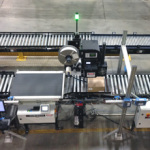
The Panther 2000-500 Series Print and Apply Systems are designed to wrap labels around the corners of boxes or square products. The standard product incorporates a 6″ stroke tamp and a 12″ stroke tamp to handle most corner wrap applications.
Read More →
Panther Active and Passive Wipe Print/Apply
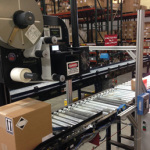
The Panther 2000-600 Series Print and Apply Systems are designed to wipe labels on the top or sides of products. The active wipe system has standard stroke lengths up to 12″ (longer strokes are available).
Read More →
Panther Print/Apply with Integrated Bagger
The Panther 2000-100 series can be integrated to many bagger systems on the market.
The system pictured has adjustments for X and Y positioning allowing accurate placement of labels anywhere on the bags. The bags are labeled the indexed to be filled by an operator or automated filling system.
Read More →
Panther Tabletop Semi-Automatic Labeler
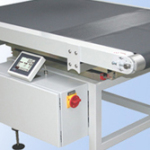
The Panther 2000-900 Series Print and Apply Systems are designed to label any product that is placed on the table from underneath. These systems are typically semi automatic and allow operators to become much more efficient. The tabletop is customized to the application with product fixturing enabling precise placement of the labels each time.
Read More →
Panther Dual Tamp Print/Apply System
The Panther PA-2000-800 Series Print and Apply Systems are designed to label adjacent sides of products (front and side, front and top, side and back, etc.). The standard Swing Arm lengths are 10″and 18″. Longer Arm lengths are available.
Read More →
Panther Flag Wrap Labeling System
The Panther 2000-700 Series Print and Apply Systems are designed to flag wrap a label on round products. Common applications are cables, all thread, steel rods, etc. Systems can accommodate varying diameters and shapes of products.
Read More →
Panther Electric Tamp Print/Apply System
The Panther 2000e is the premier distribution labeling system on the market. The 2000e is designed to top apply labels to products with varying heights. The standard stroke lengths are 24″, 34″, and 48″. This systems does all of this without the need of compressed air and is much faster than competitors long stroke systems on the market.
Read More →
Panther Shadow Entry Level Print/Apply
The Panther Shadow (PA-SHADOW-E10) is the latest addition to Panther’s offering. This system is designed to be an entry level or low volume automated system for applications that do not require full featured systems like out Panther 2000 and 2000e.
Read More →
Panther Electric Tamp Custom Configuration
The Panther P8 is the most advanced Print and Apply system on the market. The system is simply a controls upgrade from our Panther 2000. The P8 can be configured as a tamp, blow, swing arm, flag wrap, passive wipe, active wipe, active blow, inverted tabletop, and more (see Panther 2000 for applicator types).
Read More →